
From Fragmented Projects to Functioning City Ecosystems
Smart city ambition has outpaced smart city reality – until now. In 2025, momentum is shifting from isolated pilots to integrated, multifunctional initiatives where systems seamlessly interact and share data across the city stack.
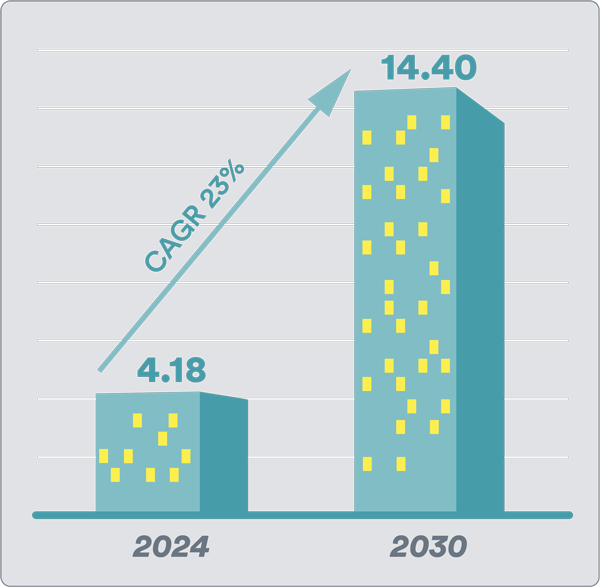
The scale is here: active smart-city wireless IoT connections are expected to rise from 4.18B in 2024 to 14.40B by 2030, a step-change that rewards solutions which connect cleanly with legacy infrastructure and each other.
As part of that, the design and placement of antennas is especially critical due to the unique connectivity challenges of urban environments. Buildings, bridges, and other infrastructure can create signal shadows or multipath fading, while high device density and network congestion can cause spectrum interference. Materials such as concrete, steel, and glass further attenuate or reflect radio frequencies, weakening signals. These factors make it difficult to maintain consistent, wide coverage and meet the demanding connectivity requirements of critical urban IoT applications.
This new report from Beecham Research explores where new IoT initiatives are unlocking value and where antenna design considerations are impacting Smart City activity groups, including: Public Safety, Transportation & Infrastructure, Street Lighting, Environmental Monitoring, and City Services. How device suppliers, solution providers and city stakeholders can align platforms, data governance, and connectivity choices to scale with confidence.
Smart City connections are set to more than triple by 2030
Smart city projects are transitioning from pilot to scale. – CTO, UK City Digital Office
- See where the market is moving – Clear analysis of business benefits, challenges, and market drivers with data-led forecasts and citizen adoption trends.
- Explore the leading use cases driving growth – including smart utilities, lighting, mobility and surveillance.
- Hear from city leaders and integrators – with exclusive insights from 24 expert interviews.
- Learn from real-world deployments – featuring multiple examples from our sponsors Yokowo, offering precision antenna performance, Semtech, and Klika Tech.
- Understand the integration imperative – how to align city goals with legacy infrastructure and the applications reaching scale.
“Cities are realising that POC projects deliver little value. Smart city initiatives are going to become very outcome-driven with clear KPIs.– VP Strategic Partnerships & Alliances, Digital City Infrastructure Provider
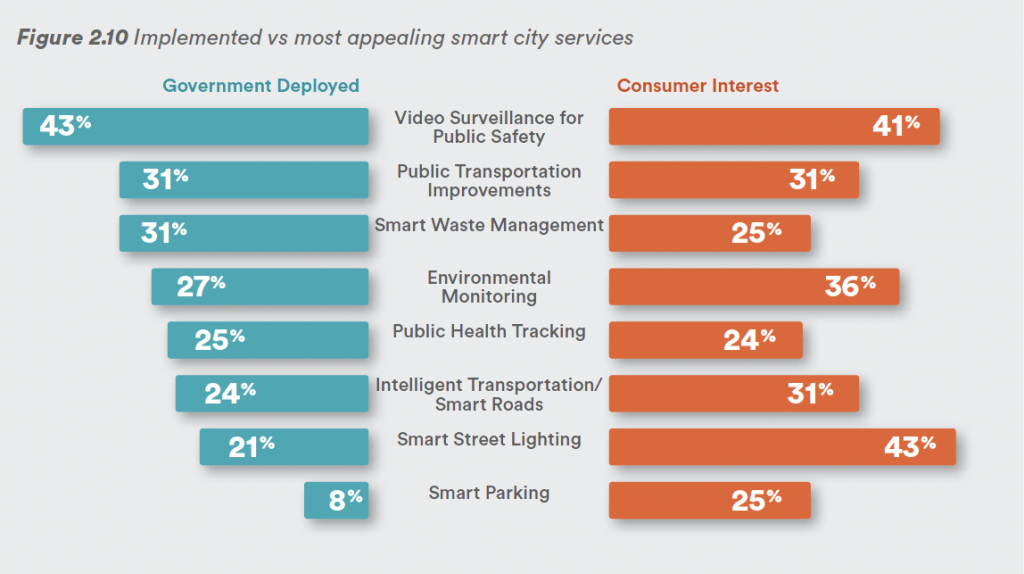
Demand outpaces deployments in key areas
Citizen interest is ahead of city rollouts in several high-value areas. At the same time, the enabling tech “rails” are widely recognised, suggesting the next gains come less from adding point solutions and more from joining them up – shared data, interoperable platforms, and sequencing deployments so adjacent services reinforce one another. Integration also underpins the operational benefits cities are seeking, faster responses, lower energy use, better safety, and improved services, by turning real-time monitoring into coordinated action.
With all these issues, antenna design must be considered early in the deployment process rather than relegated to an afterthought.
Connectivity is getting cheaper, and algorithms are getting better, enabling us to tackle problems that couldn’t be solved before.– Influencer, Smart City Office