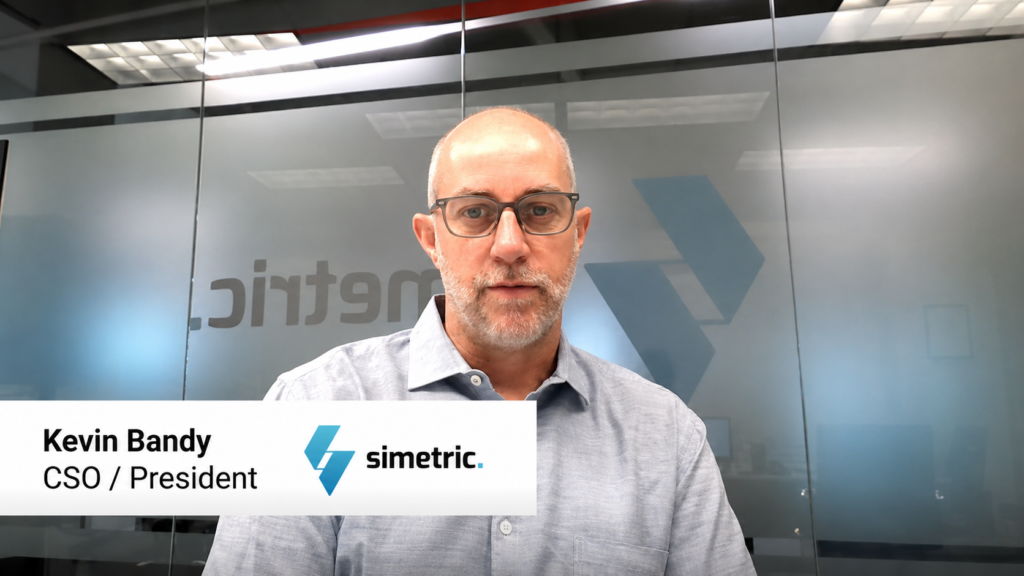
Is your enterprise ready for AI in the IoT space? Join Kevin, broadcasting from Atlanta, Georgia, for the premiere episode of our new series, “It’s Time We Talk About…”
While AI is the biggest buzzword in tech, the real challenge isn’t the AI itself – it’s an operational architectural problem. Recent data from Cisco Systems reveals a staggering reality: 76% of companies admit their network will require support to adopt AI, yet only 34% feel truly ready.
Building on Transforma Insights’ analysis of the “single pane of glass” concept, Kevin breaks down the foundational shift toward Distributed Workflow Management. If you want to harness AI without breaking your ecosystem, you need to address these core architectural pillars.
Transcript
Hello, my name’s Kevin I am joining today from Atlanta, Georgia, for a discussion with IoT Now titled, It’s time we talk about… Today’s discussion is gonna largely focus on a topic that is coming up a great deal, which is AI in the IoT space. In the last month, Transforma Insights covered a meaningful topic around single pane of glass, and they expanded that to really focus on what is a solution for managing, a such a disparate device estate. I think that information is essential as we start to look at AI, and I would highly recommend that anybody go back and review their analysis. when you look at harnessing AI, it presents operational challenges, which is why I want to build off of what Transforma Insights shared last month. you look at it recently, Cisco Systems announced something that seventy-six percent of companies say that their network is gonna require support in order to adopt AI, while only 34% of people recognize that they’re ready for AI. you apply AI opportunity in the IoT space, AI is not the problem. It’s an operational architectural problem, which is why I think having and continuing the discussion around a single pane of glass, or as Transforma describes it, as distributed workflow management, it is foundational that we actually begin this It’s Time We Talk About series here. So I want to break down eight points that I think every enterprise should be addressing when they think about employing AI in their IoT ecosystem.
1. You need a trusted system of record. Data has to be universally the foundation by which AI is measured as a point of success. Normalize operational data. Understand the consistent data relationships across your device ecosystem.
- Contextual understanding, not just data. You need to understand ownership of the data, ownership of the device. You need to understand the security operational compliance of all the devices. So context really matters on top of clean data.
- Universal visibility. You cannot have a fractured control of visibility across a device ecosystem. Terrestrial and satellite, no limitations of satellite or network coverage. You must have a single pane of glass for universal device discovery.
- The word observability thrown around a great deal these days. Visibility is great. Observability is great. Observability without control, is no control for any enterprise. So data must have a control point that enacts action that is defined by the enterprise. Observability without action is just visibility, and that is not gonna support taking action in a timely, efficient manner.
- Workflow integration. You gonna find platform-to-platform necessity. Think about a distributed workflow management solution that elevates workflow up into platforms like ServiceNow. So you have universal IoT to asset management, universal IoT to control, customer service and field service.
- Governance and trust. If you don’t have role-based access to audit and policy controls, you’re going to fundamentally run into regulatory issues. Governance and trust should be a true tenet of true AI success.
- Unlimited scale. We’re not talking about thousands of devices, we’re talking about billions of devices and hundreds of networks.
Do not incorporate limits into your AI strategy.
And 8. That all sets up to agentic operations. Data security control set up the ability to scale AI agentically So if you’re going to look at the possibilities of AI, understand the value of a distributed workflow management solution do not employ operational architecture problems into the success of your AI efforts. That is what I think it’s time we all talk about when we think about AI in the IoT space. Thank you.